Writing
Visualizing the Chair44 einstein tile in 3D
Recently, a 3D einstein tile has been making the rounds on the internet. It’s called Chair44, proposed in a preprint by Ioannis Tsiokos, and I wanted to see what it looks like. Basically, an einstein tile is a single shape that fills space, but only in patterns that never repeat. A few years ago (in 2023), a 2D tile received a lot of media attention because it was the first aperiodic monotile:
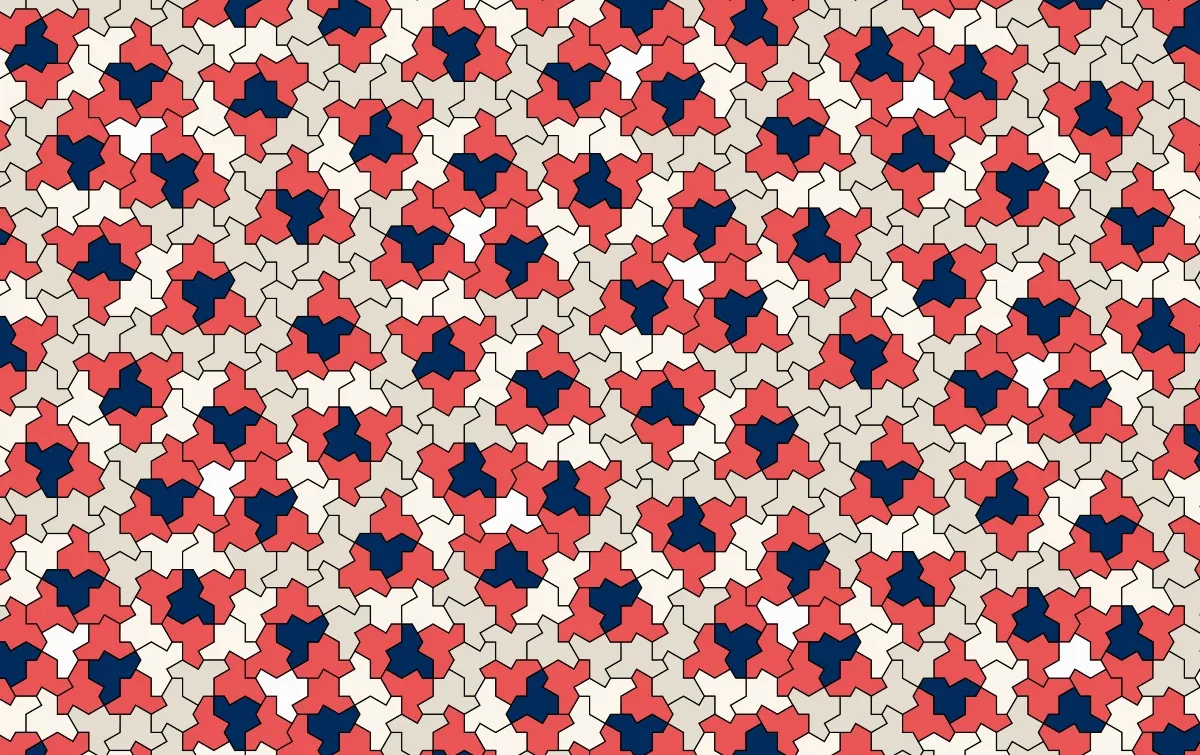
Image: Smith, Myers, Kaplan and Goodman-Strauss, CC BY 4.0.
The 3D one is a 2×2×2 cube with one corner missing (hence the name) plus 192 tiny pyramid bumps and dents. The bumps are exactly the reason why it is aperiodic, since neighbors have to fit a bump into a dent in a very specific way.
So I rebuilt the geometry from the paper’s data and made a small 3D explorer with Three.js using GPT-6 Astra and Opus 5.5.
Then I got curious whether you could change the shape and keep it working, so I got Opus 5.5 to investigate. In a couple of prompts, it discovered that if you bend space with a tiny smooth wave following the same Chair44 symmetries, you can have infinite families of new tiles. Here are 3 example families:
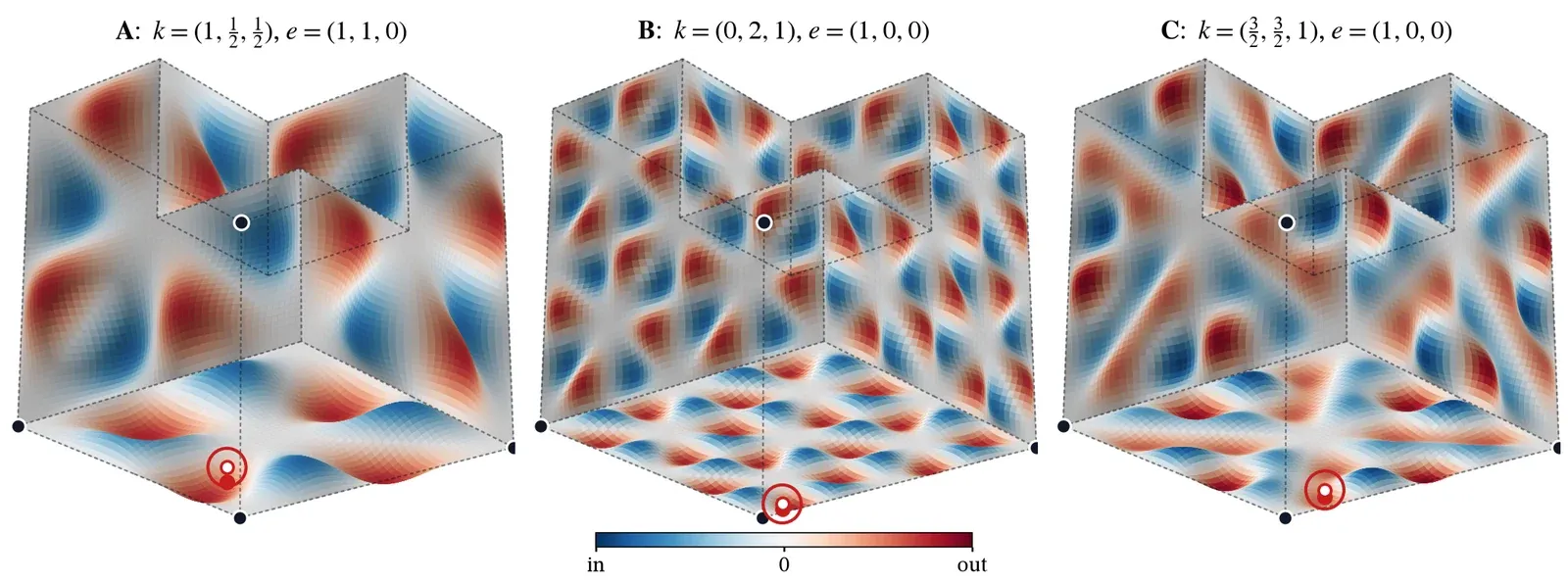
Just to verify (you cannot trust AI), I got it to generate the Lean proofs. You can check out these warps by clicking on the “Warp” icon in the visualization.
The whole project is on GitHub: Sager611/einstein-tile-3d-viz.